When 'run down' has been running for a while, the problem might be simpler than you think.
01The tiredness that doesn't lift
There's a kind of tired that sleep doesn't fix. Not bone-deep exhaustion, just a persistent flatness — the sense that everything costs a little more than it should. For some people, diet-related low iron is sitting quietly underneath it.
Iron is how the body delivers oxygen to its cells. Without enough of it, that delivery slows, and energy — real, cellular energy — starts to thin out. Research consistently links low iron stores3 (even before they reach full anaemia) with fatigue, poor concentration, and a general sense of being slightly less than yourself. Women of reproductive age, people eating little or no red meat, and regular endurance exercisers tend to be most affected, though it's not exclusive to any of these groups.
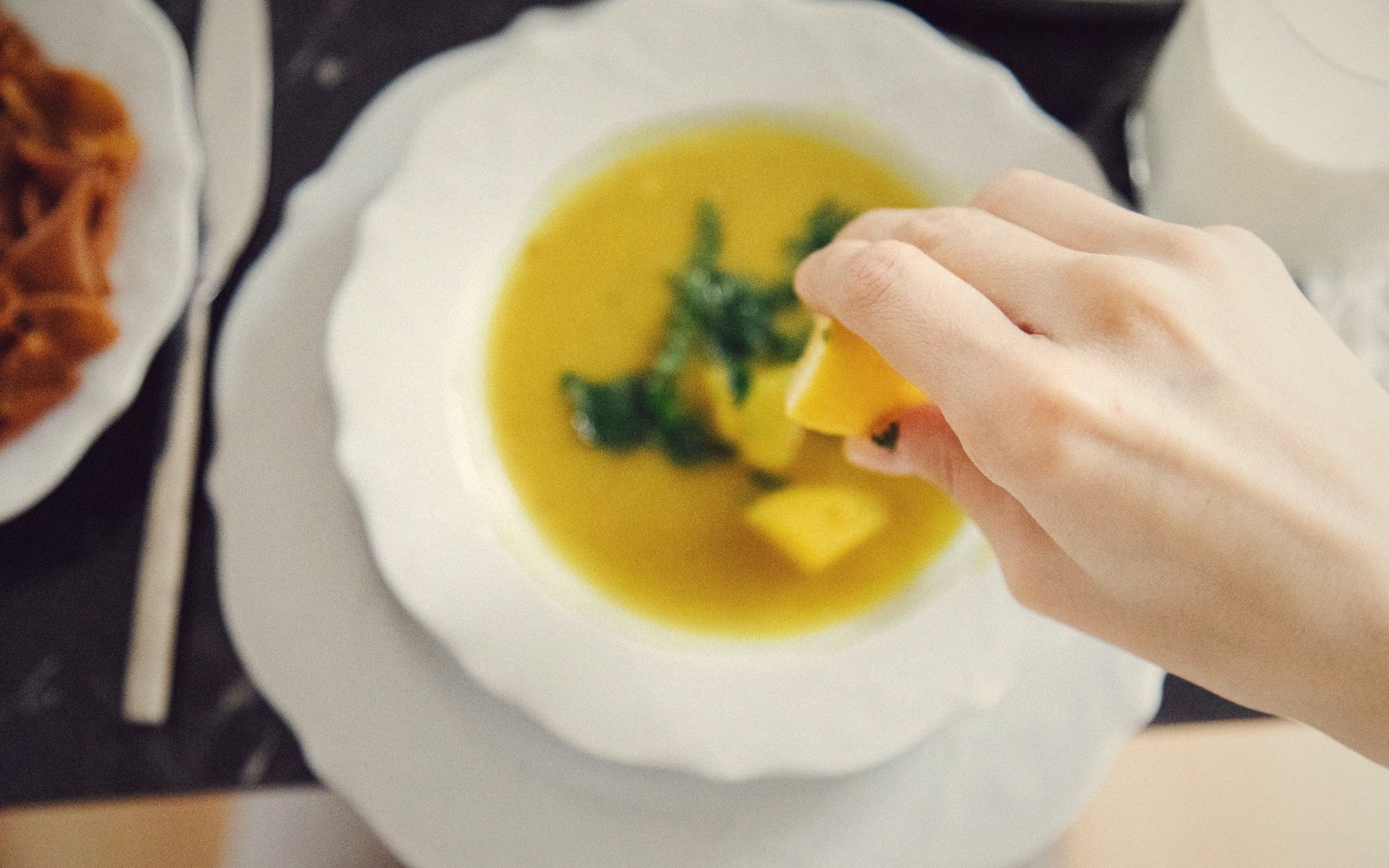
The food piece is worth knowing because it's genuinely useful, and because iron absorption is less straightforward than most nutrients. There are two kinds: haem iron1, found in meat, poultry and fish, which the body absorbs efficiently; and non-haem iron2, found in lentils, chickpeas, leafy greens, tofu, seeds and fortified cereals, which the body absorbs less readily. Neither type is magic on its own, but non-haem iron becomes considerably more available in the presence of vitamin C — which means a squeeze of lemon over a lentil dish, or a few cherry tomatoes alongside a bowl of spinach, is genuinely not a small thing.
What works against it: tannins4 in tea and coffee significantly reduce non-haem iron absorption when consumed close to a meal. Leaving a gap — drinking tea between meals rather than with them — is one of the most practical adjustments a diet can make on this front.
The evening plate is worth a mention because dinner is often the main meal and an easy opportunity: lentil soups, bean stews, dark leafy greens wilted with garlic and lemon, a small piece of meat, or iron-fortified grain alongside something bright and acidic. These aren't prescriptions. They're just plates that tend to work together.
A note of honesty: if tiredness has been persistent for weeks, food alone is unlikely to resolve it, and a blood test will tell you far more than any meal. This is general guidance, not a diagnostic tool — and 'run down' deserves a proper look if it won't shift.
Kitchen notes
- haem iron — iron from animal sources; absorbed efficiently by the body ↩
- non-haem iron — iron from plant sources; absorbed less readily, boosted by vitamin C ↩
- iron stores — the body's reserves of iron, measured before full anaemia develops ↩
- tannins — compounds in tea and coffee that reduce non-haem iron absorption ↩
As always, this is general guidance about everyday food and mood, not medical advice.