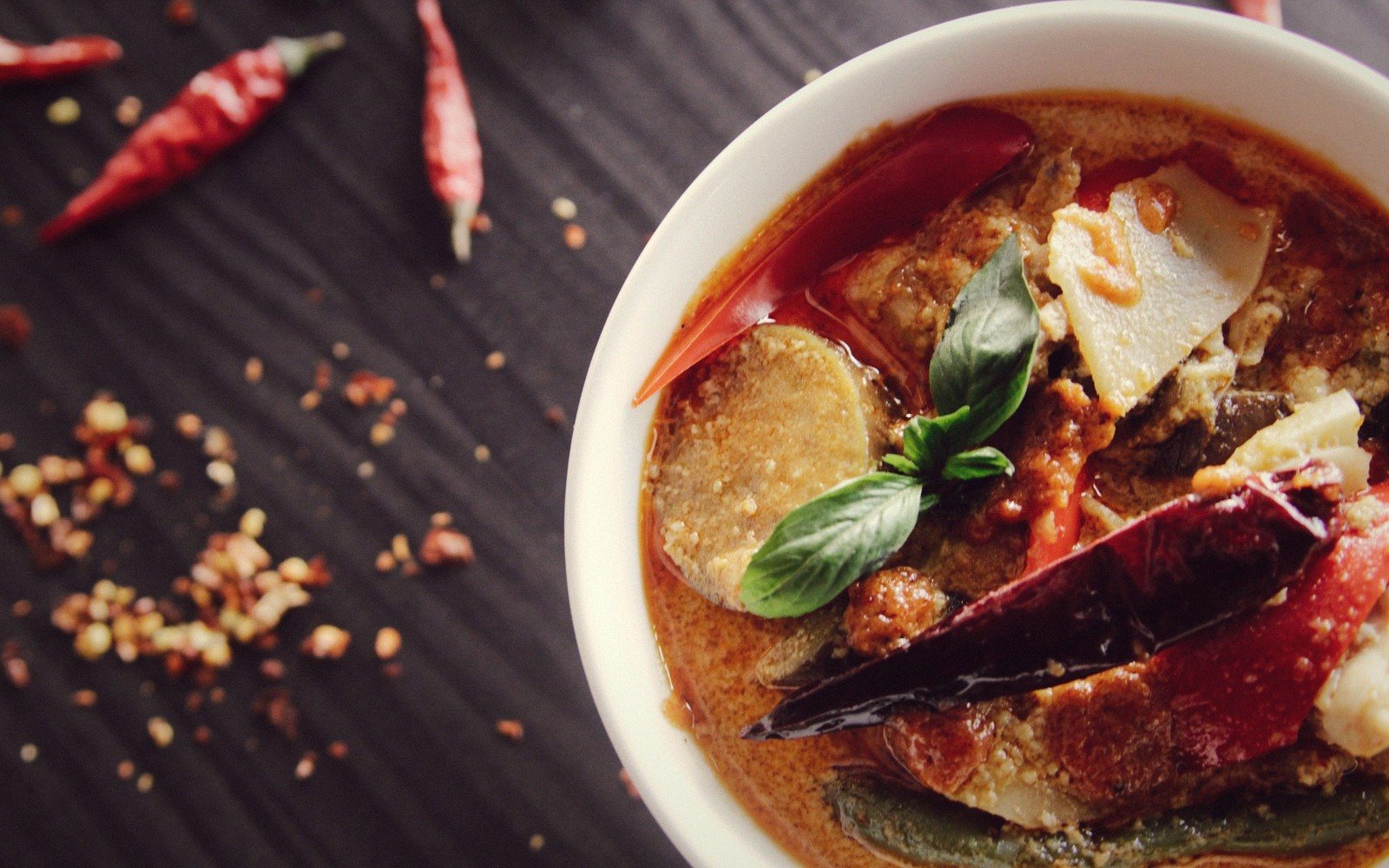
When the week has been too much, a bowl of something warm, golden, and mildly spiced can do more than dinner usually gets credit for.
01The Logic of a Gentle Heat
There is a version of curry that shouts — chilli-bright, eye-watering, built for bravado. And then there is this one: softer in voice, turmeric-gold, fragrant with cardamom1, finished with coconut milk. The kind that asks you to slow down just by making it. If you have been running at a pitch all week, that is not a small thing.
The case for spice when you are tense is real, but it has to be the right kind. Cardamom — a seed pod from the ginger family, used for centuries across South Asian and Middle Eastern kitchens — carries compounds that have been studied for mild calming properties, though the evidence is modest and most of it comes from laboratory settings rather than your kitchen. What is less contested is that the ritual of cooking with whole spices — cracking pods, watching them bloom in warm oil — creates the kind of deliberate, sensory engagement that is simply the opposite of scrolling through a bad news day. The smell alone tends to shift something.
Coconut milk lends the dish its body and its mellow quality. It is high in fat, which slows digestion and moderates the speed at which the meal affects your blood sugar — relevant because the sharp ups and downs of glucose are one of the quieter drivers of irritability and afternoon fragility. A curry built on coconut milk, with legumes or a starchy vegetable to give it substance, is a slow-release2 meal by nature. It settles rather than spikes.
02What to Put in the Bowl
The template is forgiving. Start with an onion softened gently in oil — patience here; twenty minutes over a low flame makes sweetness that no shortcut replaces. Add whole cardamom pods (bruised so the seeds show), a little ground cumin, turmeric, and a thumb of fresh ginger grated in. The heat source matters: a single mild green chilli, or a pinch of dried chilli, gives warmth without aggression. The goal is a back-of-the-throat glow, not a challenge.
The case for spice when you are tense is real, but it has to be the right kind.
From there, the main event can be chickpeas — whose slow-release carbohydrates and decent protein content make them a quietly useful ingredient on a tense, irregular eating day — or sweet potato, or a whole fish fillet laid in to poach gently in the sauce for the last eight minutes. Pour in a full can of coconut milk, let it simmer uncovered until it thickens and turns glossy, and finish with a handful of spinach stirred through at the end just long enough to wilt.
Serve it with rice rather than bread — the cooking of it gives you something to do with your hands while the curry finishes, and the slightly sticky, plain white variety is a comfort in itself. A squeeze of lime over everything just before eating wakes the whole dish up without disturbing its quietness. Fresh coriander if you have it; a pinch of flaky salt if you don't.
What you will not find here is a dramatic claim that cardamom cures tension or that coconut milk is medicinal. It is not, and this is general guidance rather than a prescription for anything. What you will find — reliably, across a difficult week — is that a meal which takes forty minutes to make slowly, smells extraordinary, and goes down warm tends to land differently than one grabbed in haste. The bowl does not fix the week. It ends the evening of it, which is often exactly what is needed.
Kitchen notes
As always, this is general guidance about everyday food and mood, not medical advice.