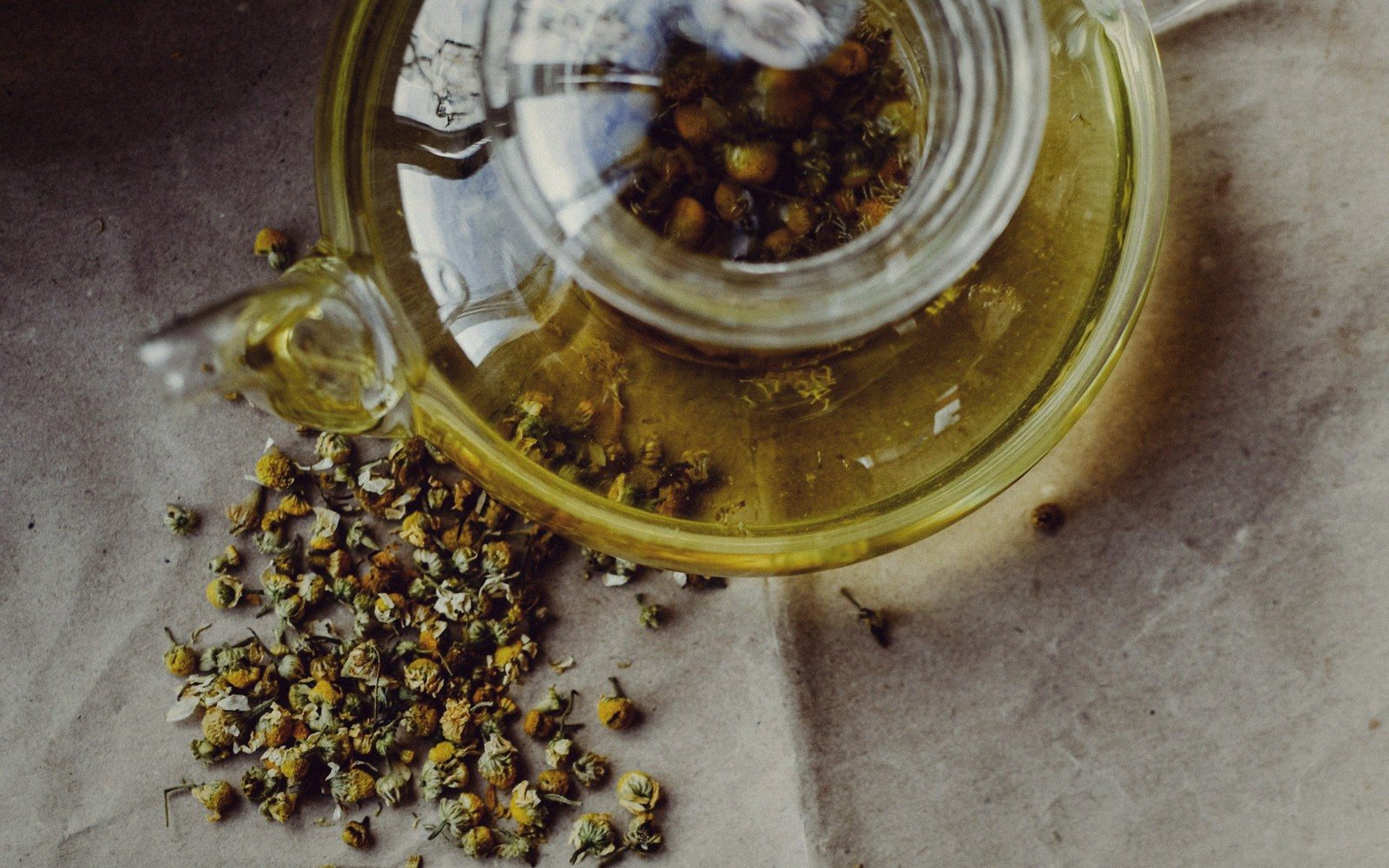
Chamomile, lemon balm, and the case for a pot of tea that actually earns its keep.
01The Ritual That Isn't Just a Ritual
There's a moment, somewhere around nine in the evening, when the body is tired but the mind hasn't noticed yet. The to-do list is still running. The shoulders are still up near the ears. A cup of something warm and herbal feels right in the way that is hard to explain to someone who doesn't do it — and easy to dismiss as pure sentiment. It might not be entirely sentiment, though. The science is modest and patchy in places, but it points somewhere real.
Chamomile and lemon balm are the two herbs with the most credible body of evidence behind them. Not dramatic evidence, not clinical-grade certainty, but enough small, reasonably designed studies to suggest that something is happening beyond placebo — though placebo is itself a meaningful thing, and a warm cup in quiet hands was never nothing.
02What the Plants Actually Do
Chamomile — Matricaria chamomilla, the familiar pale-petalled daisy you find in almost every supermarket tea aisle — contains a compound called apigenin1, a flavonoid5 that binds to benzodiazepine receptors4 in the brain. Those are the same receptors that certain anti-anxiety medications target, though chamomile works far more gently and by a different mechanism at a different scale. The effect, if it comes, is mild: a softening rather than a sedation. Several small clinical trials have found that chamomile extract reduced self-reported anxiety scores in participants with mild to moderate anxiety, and one longer trial — run over several months — found some evidence of reduced relapse in people whose symptoms had improved. The numbers are small, the populations specific, and no honest writer should overclaim. But as an end-of-day ritual for ordinary tension, chamomile has earned its corner of the kitchen shelf.
Chamomile and lemon balm are the two herbs with the most credible body of evidence behind them.
Lemon balm (Melissa officinalis) works differently and, for some people, more noticeably. It inhibits an enzyme called GABA transaminase3, which breaks down gamma-aminobutyric acid — GABA being the main inhibitory neurotransmitter in the brain, the one that damps down neural activity when the situation calls for it. Higher GABA activity tends to be associated with feeling calmer. Some small studies have found that lemon balm supplements improved self-reported calm and mood, and reduced subjective feelings of stress, within a few hours of taking them. Tea brewed from the dried leaf contains less of the active compounds than a standardised extract, so the effects from a cup are milder — but they're not zero, and the sensory experience of the herb, with its clean lemony brightness, is itself oddly settling.
These are not the same as medication. They are not treatments for anxiety disorders, and if tension is persistent or severe enough to interfere with daily life, a cup of tea is a lovely thing and a doctor's appointment is a better one. But for the ordinary wired evening — the kind most adults know — they seem to do something.
03How to Make It Count
There is, it turns out, a better and a worse way to brew chamomile. Most people use water that is too hot and steep it too briefly. Boiling water can make chamomile bitter and cook off some of the delicate aromatics that give the tea its distinctive soft-apple scent. Water around 90–95°C, steeped for at least four to five minutes with a lid on the cup to trap the volatile compounds, produces a far more fragrant and pleasant result. Use more flowers than you think you need — a heaped teaspoon per cup at minimum, two if you're using a pot. The same patience applies to lemon balm: steep it covered, three to five minutes, with fresh or dried leaf, and it should smell faintly of lemon sherbet and green things.
The two blend beautifully, which is partly why so many commercial 'sleep' and 'calm' blends combine them. A pot of chamomile and lemon balm, brewed a little stronger than you'd think right and taken somewhere quiet — away from the phone, away from overhead lighting if possible — is doing at least two things at once: whatever the compounds are or aren't doing biologically, and the simple physiological fact that sitting still and drinking something warm lowers your heart rate. Both matter. Neither cancels the other out.
Passionflower (Passiflora incarnata) is worth a mention as a third herb with a credible, if smaller, evidence base — also thought to work via GABA pathways, sometimes found alongside chamomile and lemon balm in blended teas. Its flavour is mild and slightly grassy, easy to get along with. Valerian is the herb most people have heard of in this context, and the one with the most studied history, but its evidence for improved sleep is genuinely mixed and its smell — earthy to the point of pungent — makes it harder to love. It is perhaps the last resort in the herbal canon.
None of this is magic. But a pot brewed carefully, taken slowly, in a room that has been allowed to get a little darker and quieter — that is a small, real act of kindness toward a nervous system that has been going since morning.
Kitchen notes
- apigenin — flavonoid in chamomile that binds gently to brain calming receptors ↩
- GABA (gamma-aminobutyric acid) — brain's main inhibitory neurotransmitter; damps neural activity
- GABA transaminase — enzyme that breaks down GABA; lemon balm inhibits it ↩
- benzodiazepine receptors — brain receptor sites associated with calm and anxiety relief ↩
- flavonoid — plant compound with biological activity; found widely in herbs, fruits, vegetables ↩
- Matricaria chamomilla — scientific name for common chamomile
- Melissa officinalis — scientific name for lemon balm
- Passiflora incarnata — scientific name for passionflower
As always, this is general guidance about everyday food and mood, not medical advice.