01Why Something So Simple Works
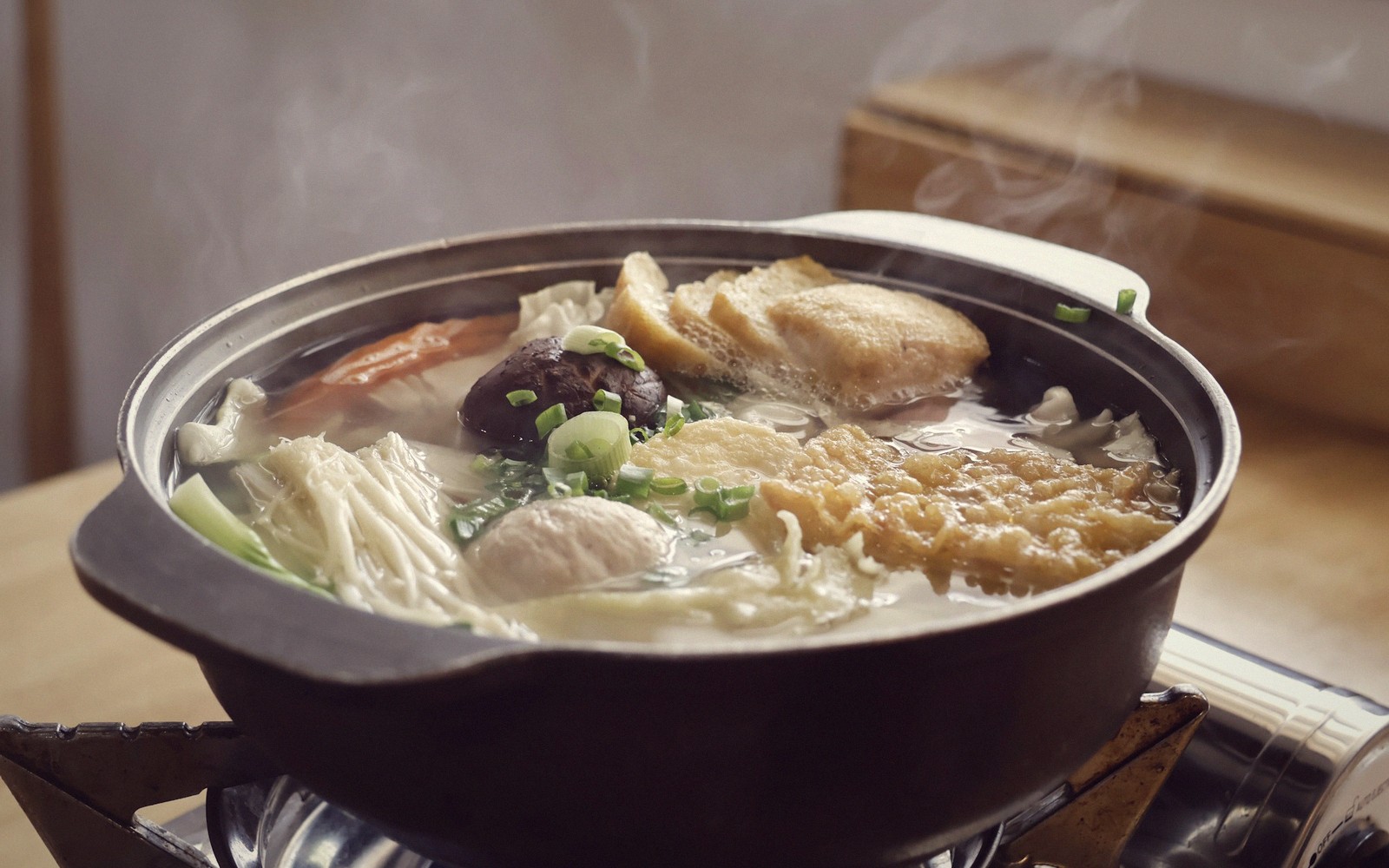
There's a version of the wired evening most people know: not tired enough to sleep, not calm enough to eat properly, the day still buzzing somewhere behind the eyes. What you want, in that state, is not a meal that asks anything of you. A bowl of good broth — whether you've made it yourself or stirred it from a quality stock concentrate — is about as low-friction as nourishment gets.
Part of the effect is simply warmth. Research on thermal comfort suggests that holding or cradling something warm has a small but genuine effect on perceived relaxation — the hands signal safety to the rest of the body. Hot drinks and warm foods are processed, in some sense, as comfort rather than challenge. That isn't magic; it's physiology doing something quite ordinary.
The salt matters too, and it's worth saying plainly: on a genuinely difficult evening, when appetite is flat and the body has been under sustained pressure, a moderate amount of sodium in a warm liquid is both palatable and useful. You're likely slightly dehydrated (stress and a long day will do that), and broth offers fluid and electrolytes3 in a form easy to absorb. Better hydration tends to soften the jagged edges of tension — the headache, the over-reactivity, the inability to settle.
Then there's the glycine1 question. Broth made from bones — a long-simmered chicken or beef stock — contains glycine, an amino acid that has attracted genuine research interest for its calming properties. Studies suggest glycine may support sleep onset and reduce core body temperature slightly at night, which is one of the things the body does naturally in its wind-down phase. The amounts in a typical bowl are modest, and the science is far from settled, but it's real enough to mention.
Umami2 — the deep savouriness of a good broth — also appears to trigger a sense of satiation and satisfaction without a large caloric load. It doesn't spike blood sugar, it isn't stimulating, it leaves no heaviness. If you've been skipping meals during a pressured day, it's a gentle way back in before something more substantial.
None of this makes broth medicinal. Tension and sleeplessness have many causes, and a mug of stock won't fix a structural problem. But as a quiet, repeatable ritual on a wired evening — warm, salted, slow — it's got more going for it than it first appears. Sometimes the simplest things are earning their keep.
Kitchen notes
This is general guidance on food and everyday mood, not medical advice. If sleep or anxiety is a persistent concern, it's worth talking to someone qualified.