01Make it earn its place
A salad that whispers doesn't do much for anyone. Pale, soft, underdressed — that kind of bowl is a commitment you immediately regret. But a salad with some noise to it: something to bite against, something that snaps back, something sour or peppery enough to make you pay attention — that's a different proposition entirely.
The mood case for bright, crunchy food is modest but real. Chewing itself appears to have a mild alerting effect — the jaw's activity nudges arousal in the brain, which is partly why soft food at lunch can feel vaguely sedating. Add to that the sensory lift of acidic ingredients: vinegar, citrus, sharp pickles. Sourness is one of the faster flavour signals the brain processes, and there's evidence it prompts a brief uptick in alertness. Nothing dramatic. Just the difference between staring at your desk at two o'clock and not.
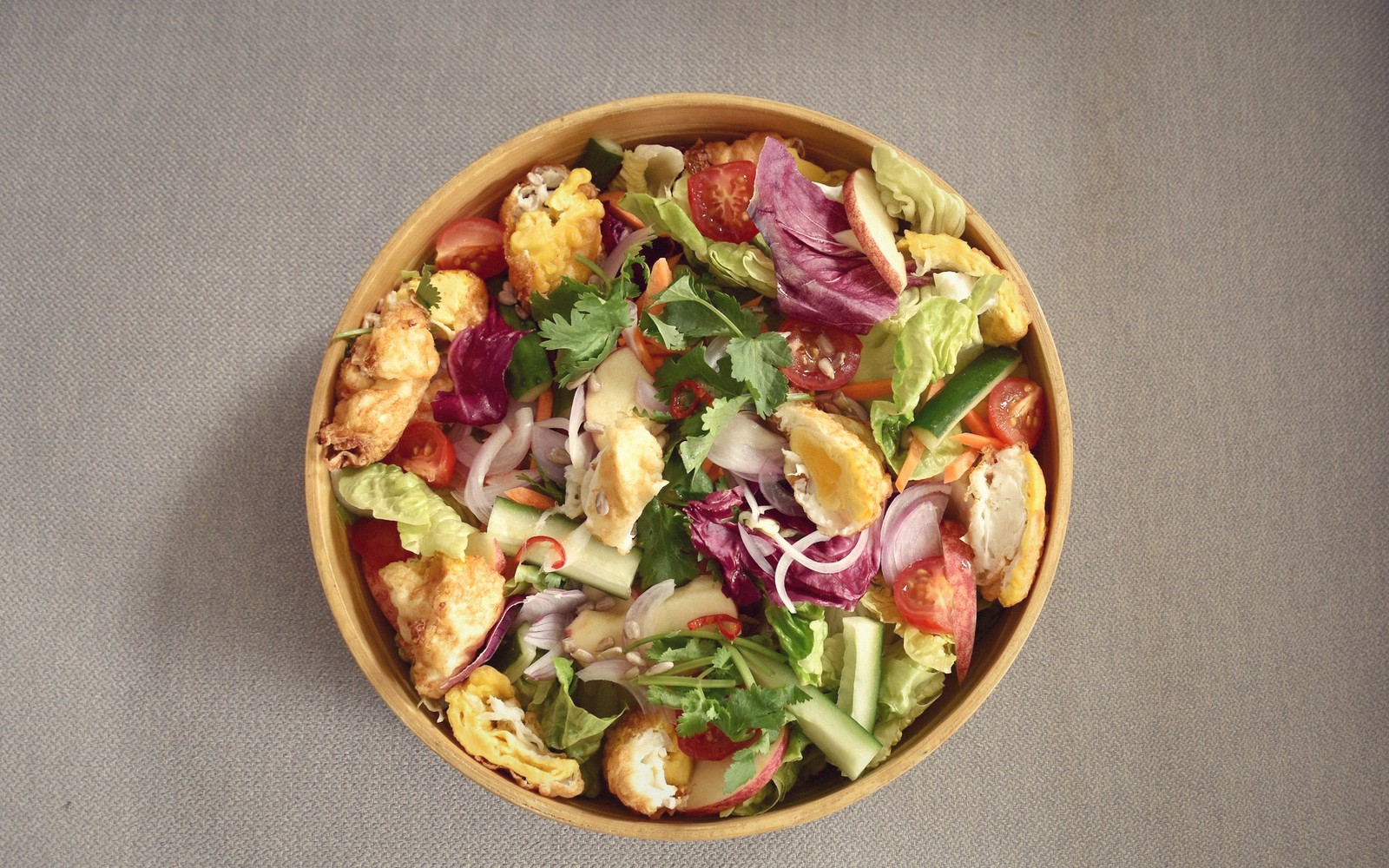
The rule is less about any particular ingredient than about texture and contrast. Fennel, radishes, toasted seeds, torn radicchio, a fistful of watercress, a squeeze of lemon over everything at the end. Raw apple alongside something earthy. Capers where you wouldn't think to put them. Colour usually follows naturally from crunch — the deep purples, the orange of a grated carrot, the green-on-green of herbs over leaves. These also happen to be the ingredients carrying fibre, micronutrients, and phytocompounds1 that broader diet research consistently links to steadier energy.
The bright salad isn't a prescription. It's a bias worth building: when in doubt, add something that bites back.
Kitchen notes
- phytocompounds — plant-derived chemical compounds with biological activity ↩
- arousal (cognitive) — level of mental alertness and readiness to engage
As always, this is general guidance about everyday food and mood, not medical advice.