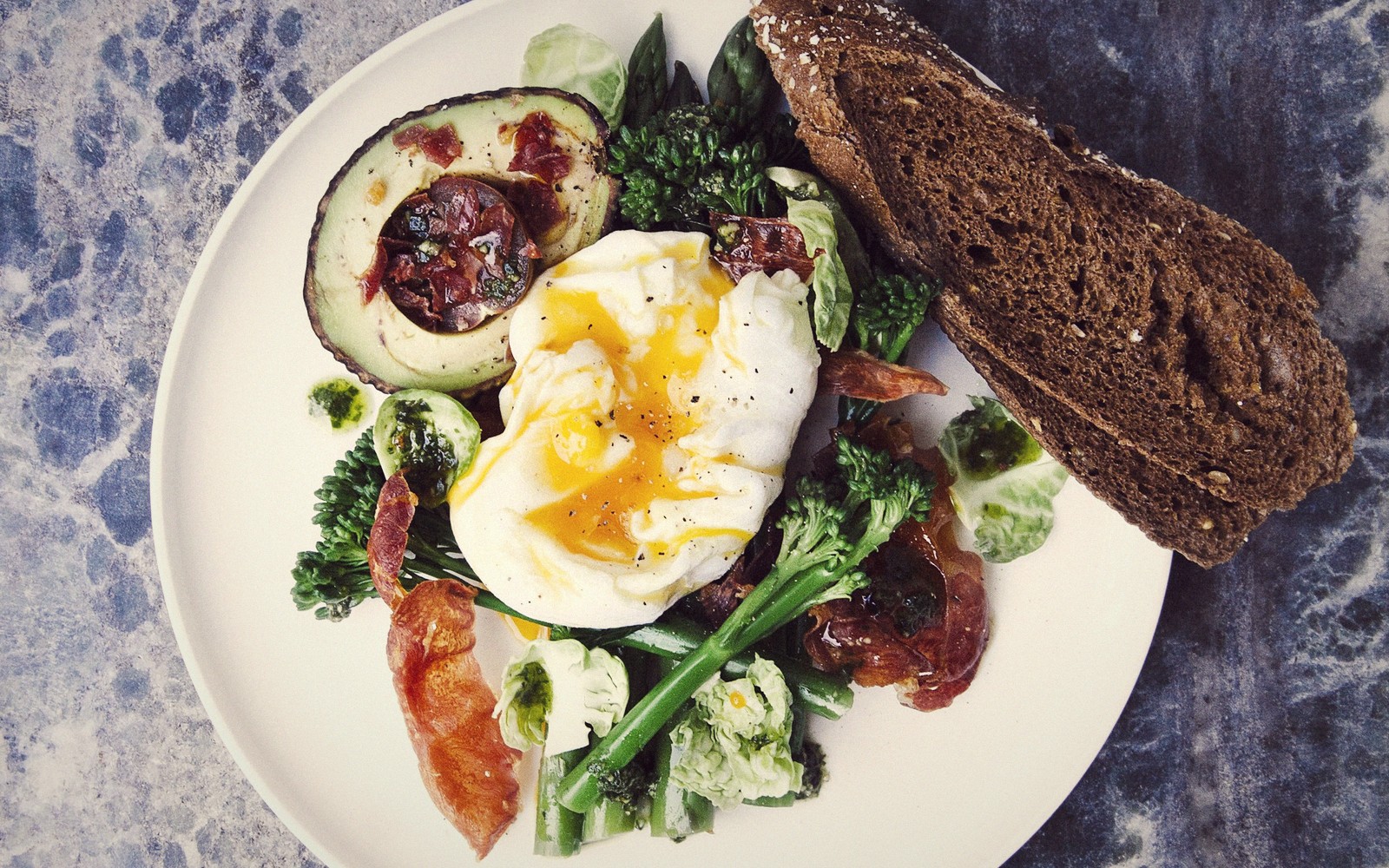
01The argument for starting savoury
A scrambled egg takes four minutes. Two of them, with a slice of toast and something sharp on the side, will put roughly twelve grams of protein on your plate before you've properly woken up. That number matters more than most people realise — not because protein is magic, but because the alternative, a fast-carbohydrate breakfast eaten alone, tends to set a particular kind of morning in motion: fine for an hour, then sticky and distracted and reaching for something else.
The mechanism is fairly well established. Protein slows gastric emptying1, which flattens the blood-glucose curve that a carbohydrate-only meal sends spiking. Steadier blood sugar means a steadier supply of glucose to the brain, which translates, in ordinary experience, to a longer stretch of focus before the edges go soft. The amino acids in eggs — particularly leucine and tyrosine2 — also feed into neurotransmitter pathways. Tyrosine is a precursor to dopamine, though the relationship between dietary intake and actual brain chemistry is not a simple equation; food is not a dose of anything. What the research does suggest, more modestly and more usefully, is that a protein-anchored breakfast tends to support more even energy across the morning than one built on refined carbohydrate alone.
Eggs earn their place here not because they're uniquely special but because they're unusually complete: all the essential amino acids, plus choline3 (which plays a role in memory and attention, and which most people don't get enough of), plus the fat to slow absorption further. The yolk is not the problem it was briefly declared to be in the 1980s and 1990s; that particular dietary panic has largely been revised. Eat the yolk.
The other thing eggs offer is speed, which matters in the morning when motivation to cook is at its lowest. A fried egg, a soft-boiled egg pulled from yesterday's batch in the fridge, an omelette stretched over a handful of leftover vegetables — none of this requires a plan or any real effort. The slow breakfast doesn't need to be elaborate; it just needs something substantial.
None of this is a guarantee of a brilliant day. Mood and focus are shaped by sleep, stress, light, movement, and a dozen things food cannot reach. But breakfast is a reasonable place to put something genuinely useful — and a plate that keeps you steady until noon is, at minimum, a decent start.
Kitchen notes
As always, this is general guidance about everyday food and mood, not medical advice.