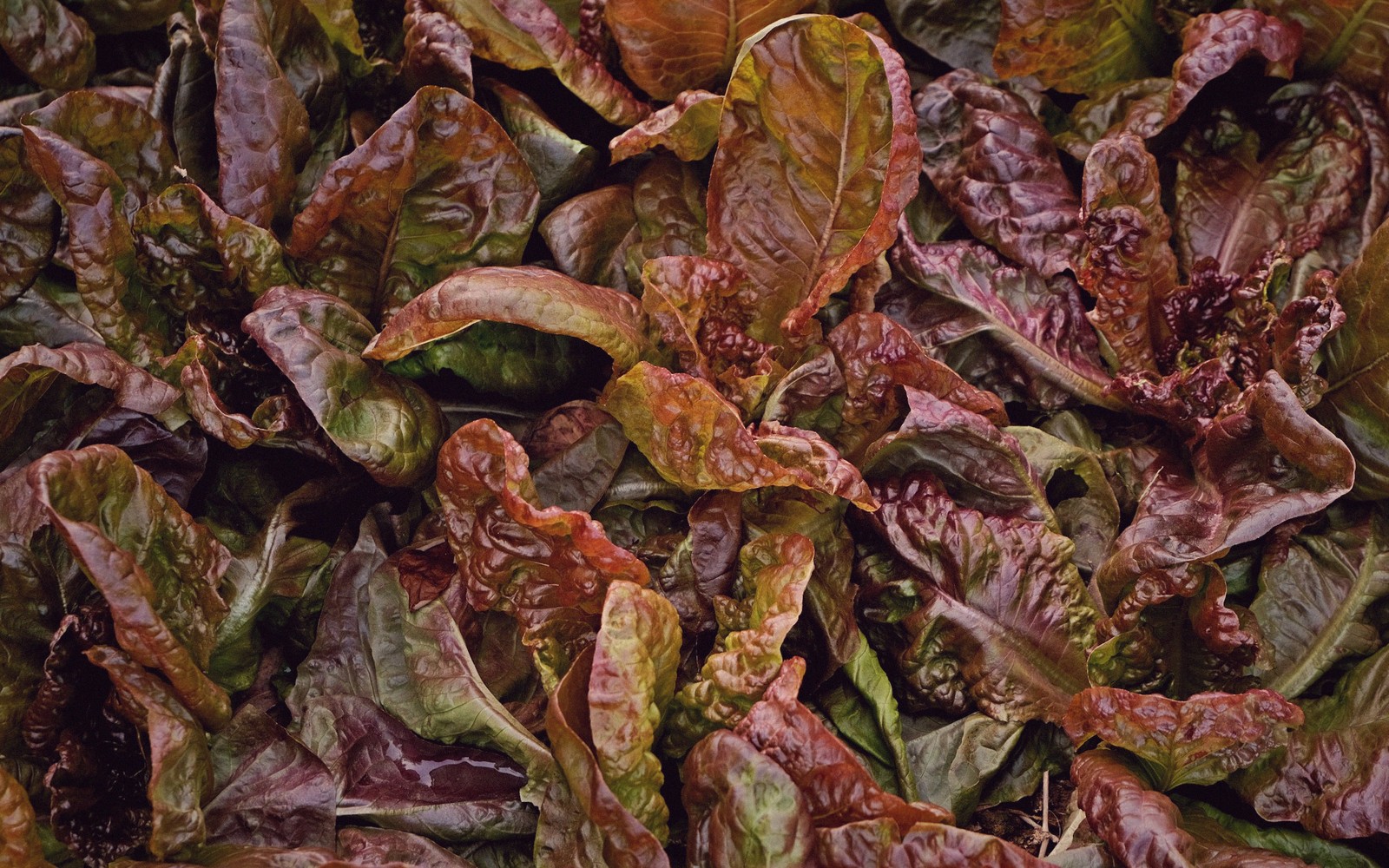
01The Taste You Reach for When You're On Edge
There's something instinctive about craving bitterness when you're irritable. Not sweet, not salty — bitter. A sharp salad, a wedge of radicchio, dandelion leaves dressed with nothing but oil and lemon. It doesn't feel like comfort food, exactly. It feels like a match for your mood, and that might be precisely the point.
Bitter greens — radicchio, chicory, dandelion, endive, escarole — tend to be eaten in too small a quantity and dismissed as garnish. They deserve more credit. They're among the most nutrient-dense leaves you can put in a bowl, and they work on the body in ways that are, at least in part, genuinely understood.
The liver is the place to start. Bitter compounds — collectively called bitters1, though the chemistry varies by plant — stimulate bile production, which aids fat digestion and supports the liver's considerable workload. The liver is deeply involved in regulating blood sugar and clearing metabolic waste; when it's sluggish, so, often, are you. This isn't folk herbalism; it's physiology, though the research on everyday dietary bitters is still modest rather than definitive.
Dandelion greens in particular are a meaningful source of potassium, vitamin C, and vitamin A, and contain prebiotic fibres that feed gut bacteria. Radicchio carries inulin4, another prebiotic, alongside anthocyanins3 — the pigments that give it its bruised-purple colour and some documented anti-inflammatory properties. None of this is magic. None of it will fix a genuinely bad day. But a bright, crunchy salad of bitter leaves, eaten slowly, offers something more immediate too: a sharp sensory jolt that pulls attention out of the spiral.
Bitterness also slows eating. It demands a little pause, a little chewing, a moment of full presence. On a day when everything is grating, that friction might actually be useful.
The preparation is almost irrelevant: a handful torn into a bowl, dressed with good oil and something acidic. Grilled radicchio with a few drops of pomegranate molasses. Dandelion leaves wilted briefly with garlic and a squeeze of lemon. The less done to them, the better they work.
They taste like they mean it. On the right day, that's exactly what you need.
Kitchen notes
- bitterns — bitter plant compounds that stimulate digestive secretions ↩
- prebiotics — fibres that feed beneficial gut bacteria rather than being digested directly
- anthocyanins — pigments in purple/red plants with studied anti-inflammatory properties ↩
- inulin — a prebiotic fibre found in chicory-family plants including radicchio ↩
As always, this is general guidance about everyday food and mood, not medical advice.