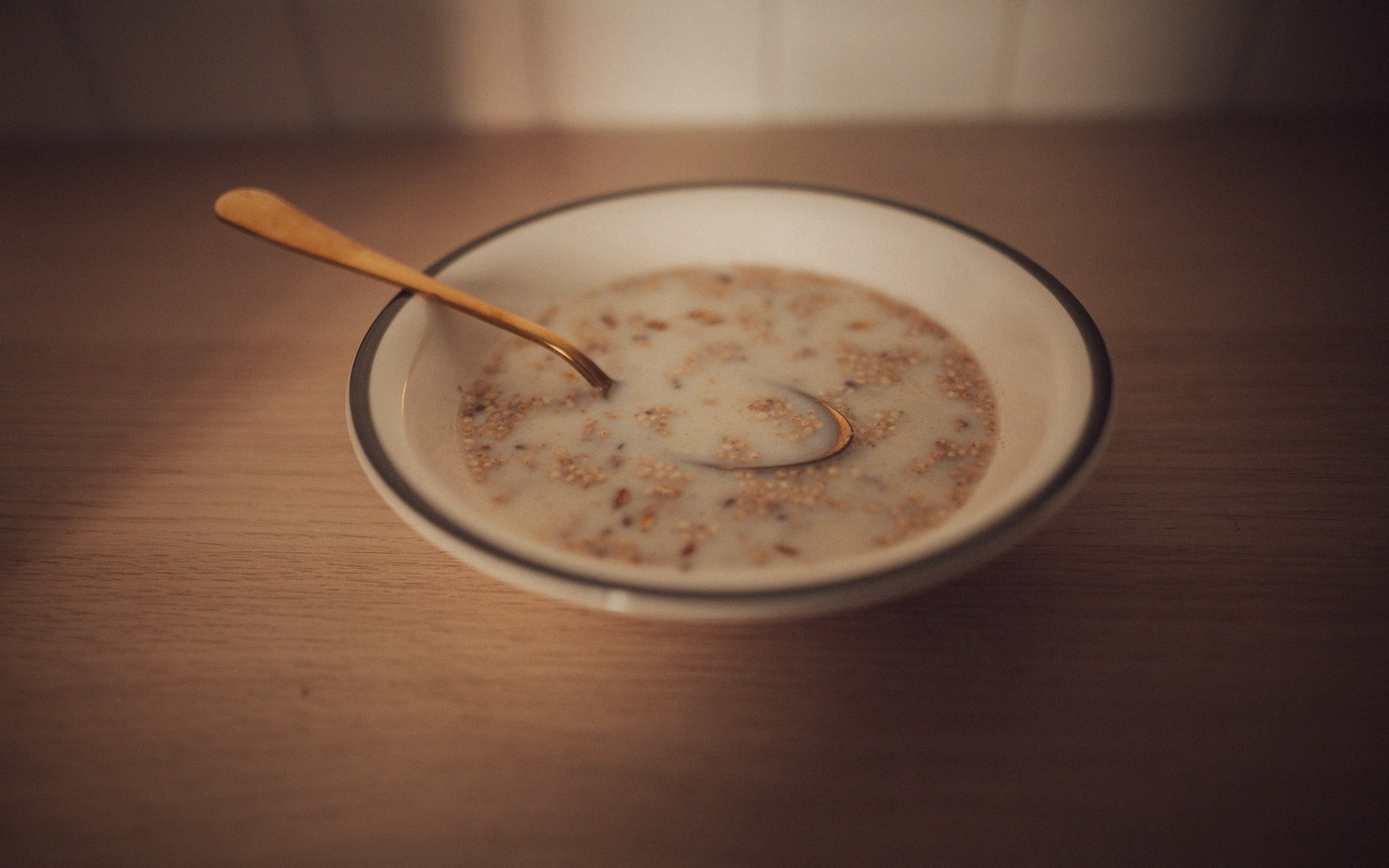
01The Pace You Begin With
There's a kind of breakfast that happens standing up — bar of something over the sink, coffee grabbed on the way out, maybe nothing at all. It solves the immediate problem of hunger, or it ignores it entirely. Either way, the morning starts at a sprint, and the sprint tends to continue.
What's less obvious is that the meal itself isn't just fuel. The pace of it matters too. Sitting down, even briefly, to something warm and deliberate signals something to the body: there is time. That's not poetic licence — the physiological case for an unhurried breakfast is quieter than the wellness industry makes it sound, but it's real.
02What Oats Actually Do
Oats are probably the most evidence-backed breakfast food that nobody finds interesting, which is a shame, because the mechanism is genuinely worth understanding. They're high in a soluble fibre called beta-glucan1, which slows the rate at which glucose enters the bloodstream. That slower rise — and the correspondingly gentler fall — means energy that doesn't peak sharply and crash before eleven. Studies have linked this kind of steadier blood sugar2 profile to better concentration and fewer of those mid-morning irritability spikes that seem to come from nowhere. They don't come from nowhere. They often come from breakfast.
The protein question is worth mentioning too. A plain bowl of oats isn't particularly high in protein on its own, which is why adding something — a spoonful of nut butter, a soft-boiled egg alongside, full-fat milk rather than water — changes the character of the morning substantially. Protein slows digestion further and extends satiety3, meaning the 10:30 biscuit is considerably less necessary. This is protein at breakfast doing quiet, unglamorous work.
Warmth is its own argument. A cold desk-eaten breakfast is fine; a warm one tends to slow the eating down, which matters more than it sounds. Eating quickly is associated with greater overall food intake and a blunter awareness of fullness. The heat slows the pace. The pace allows the body to catch up with the meal.
03Ten Minutes as a Practice
The ritual is doing some of the work, and there's nothing soft-headed about saying so. Research into circadian biology4 increasingly suggests that consistent morning routines — regular wake time, daylight exposure, and yes, regular mealtimes — help to anchor the body's internal clocks. When those clocks run in rough synchrony, mood and energy tend to be more predictable across the day. A hurried, irregular breakfast is a small but real disruption to that system.
Oats are probably the most evidence-backed breakfast food that nobody finds interesting.
Ten minutes is the actual time it takes to make oats properly — not microwaved into gruel, but cooked slowly in milk or water, stirred occasionally, finished with whatever you have: a sliced banana, a scatter of seeds, a drizzle of honey, a shake of cinnamon. This is not a complex recipe. It is simply cooking with a little attention, which is itself a form of deceleration before the day gets going.
There's also the hydration piece, easily overlooked. After eight hours of sleep, the body is mildly dehydrated, and even mild dehydration affects mood and cognitive sharpness in ways that are measurable, if modest. A glass of water with breakfast, or the liquid already in the oats, counts. Coffee counts too — within reason, and with the acknowledgement that the line between energised and wired is worth knowing.
None of this is magic. A slow breakfast doesn't guarantee a smooth day, and oats are not a treatment for anything. What they are is a reliable, inexpensive, reasonably pleasurable way to begin — one that keeps blood sugar steadier, extends fullness, and doesn't require you to eat standing at the sink. The pace you begin with has a way of persisting. That's the case for the slow breakfast: not a cure, not a protocol, just ten minutes that tend to earn back more than they cost.
Kitchen notes
As always, this is general guidance about everyday food and mood, not medical advice.